![Blazer Codes [ from business to casual style, along with its history and recommendations ].](https://otokomaeken.com/wp-content/uploads/2025/10/1bf1b3390797bfffbf65f76cce9aa706-750x396.jpg)
Today, the blazer is loved in a variety of ways by all generations. The blazer is often thought of as a “navy jacket with gold buttons,” but strictly speaking, it is a tailored jacket with metal buttons. In this issue, we will discuss the story of the blazer, from its birth in the UK, through its rise to become a symbol of the American Tiger, to its spread in Japan. In addition, Mr. Shinozuka of Azabu Tailor will take a look at a scene from a classic movie and the blazer style of the British royal family, and together with Mr. Shinozuka of Azabu Tailor, he will delve deeper into points to be aware of when wearing it as business wear. Finally, we will introduce five recommended models from the Pitti Uomo snapshot, as well as the most popular casual styles.
Sponsored by
There are two popular theories about the origin of the blazer: one is that it originated from the LMBC, a boat club at Cambridge University, and the other is that it originated from the HMS Blazer, a warship.
There are two prevailing theories for the origin of the blazer in 19th century England. One is that it was the red jacket used by the Lady Margaret Boat Club (LMBC), the boating club of Cambridge University. The other theory is that it originated from the navy double jacket worn by the crew of the Royal Navy warship HMS Blazer when attending royal events.
Cambridge University Boat Club LMBC originated theory
There are records of LMBC blazers being worn from the 1830s to the 1840s. It was tailored in a bright red flannel material and was adopted to increase visibility during competition. It is said that this later became the origin of the word blazer, meaning a flaming red jacket.
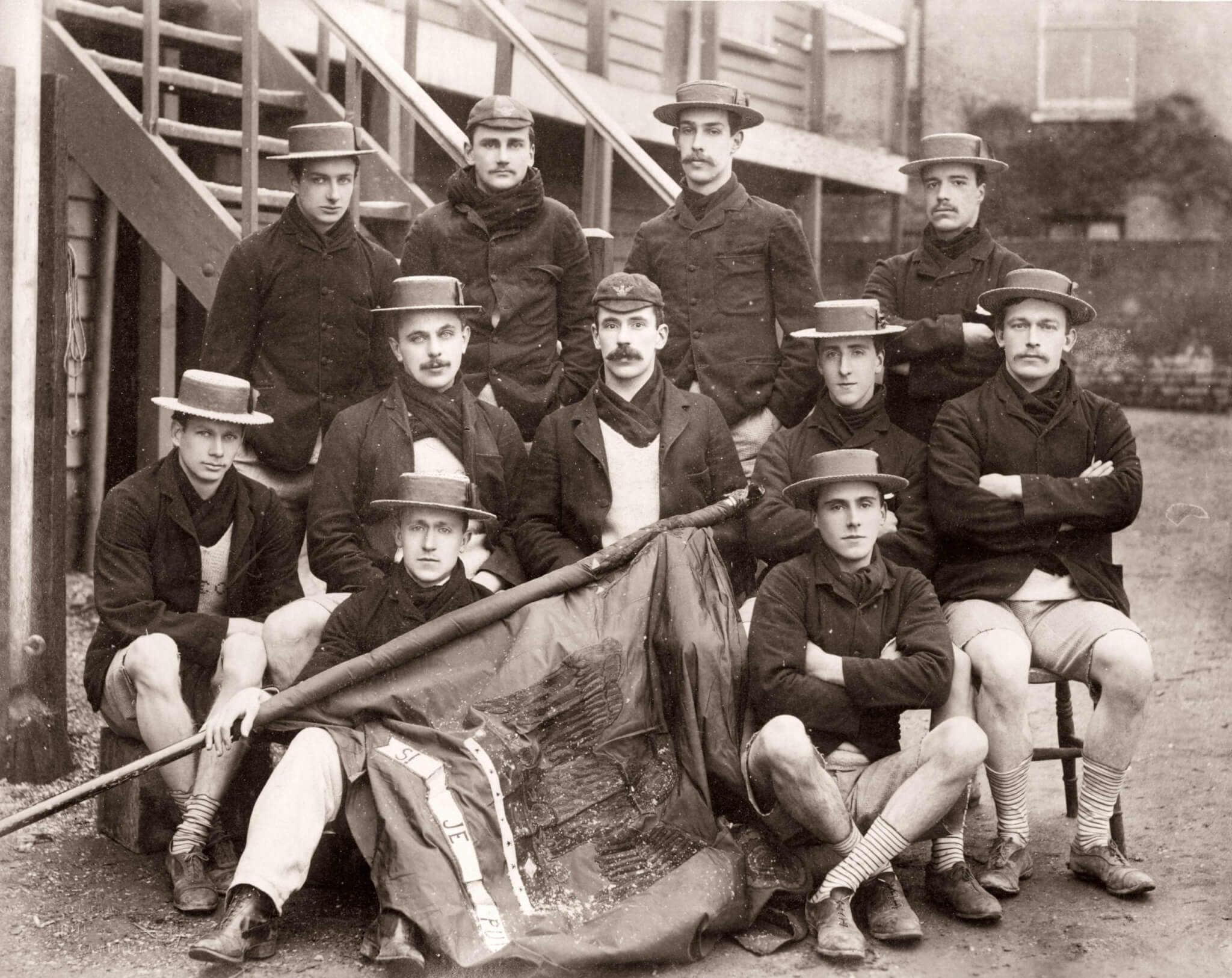
Here is a group photo of LMBC members taken in the 1890s Photo: Mary Evans Picture Library/Afro 19th century vintage photograph – Lady Margaret Boat Club, Cambridge, rowing team 1890s
Warship HMS Blazer origin theory
The HMS Blazer origin theory states that when Queen Victoria inspected the warship in 1837, the crew greeted her with a navy double jacket with metal buttons struck on it. The theory is that this attire caught the attention of court officials and spread as official naval attire. The jacket is said to have had no back vent and was lined with multiple brass and gold buttons, and is considered the prototype for the double navy blazer of today.
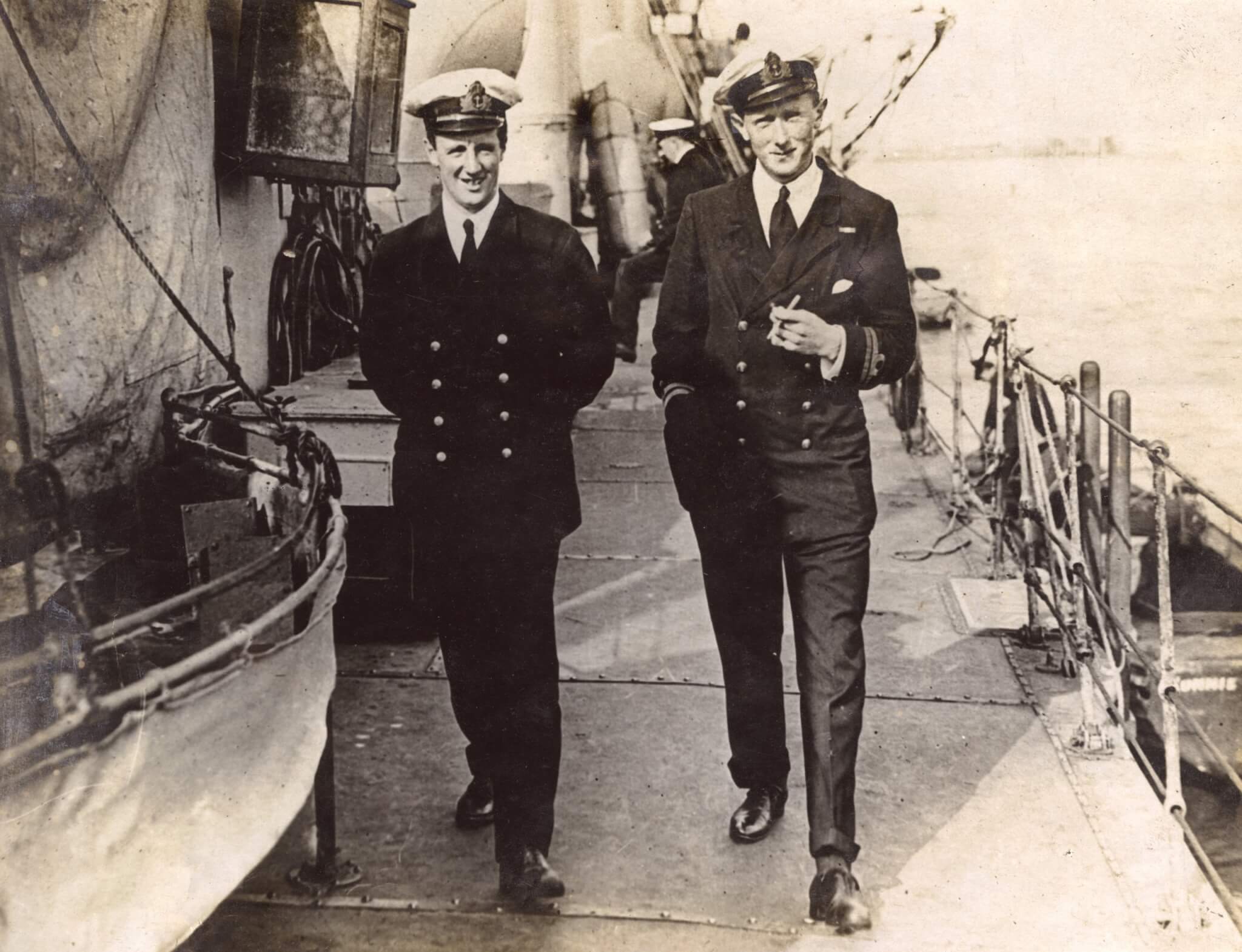
Royal Navy officers photographed during the First World War Photo: Mary Evans Picture Library/Afro Two officers of the Royal Navy on the deck of a ship during the First World War. The man on the right is possibly Commodore (later Admiral of the Fleet) Sir Reginald Yorke Tyrwhitt (1870-1951). Date: 1914-1918
The timing of these theories overlap, making it difficult to determine which came first. It is certain, however, that two parallel lines of blazers existed in nineteenth-century England: the LMBC as a single, club uniform type, and the HMS Blazer as a double, naval dress type. The prototype of what is now commonly called the blazer is thought to have been formed under the influence of one or both of these two styles.
Blazers came to the United States in the late 19th and early 20th centuriesBrooks Brothers popularized the blazer as daily wear and it became an iconic item of American style!
The blazer, born in England, came to the United States in the late 19th and early 20th centuries. Initially worn as English-style club jackets by a limited upper class, such as yacht clubs and college sports clubs, Brooks Brothers redefined the blazer as everyday wear. In its 1930s catalog, the company launched the single jacket, made of dark blue flannel with metal buttons, as a blazer. Unlike earlier club jackets with flashy colors and patterns such as red and stripes, Brooks Brothers unified the color to navy and eliminated the breast insignia, making the jacket suitable for both business and casual wear by ordinary men. This “navy, gold buttons, and single breasted” configuration is the prototype for the modern blazer.
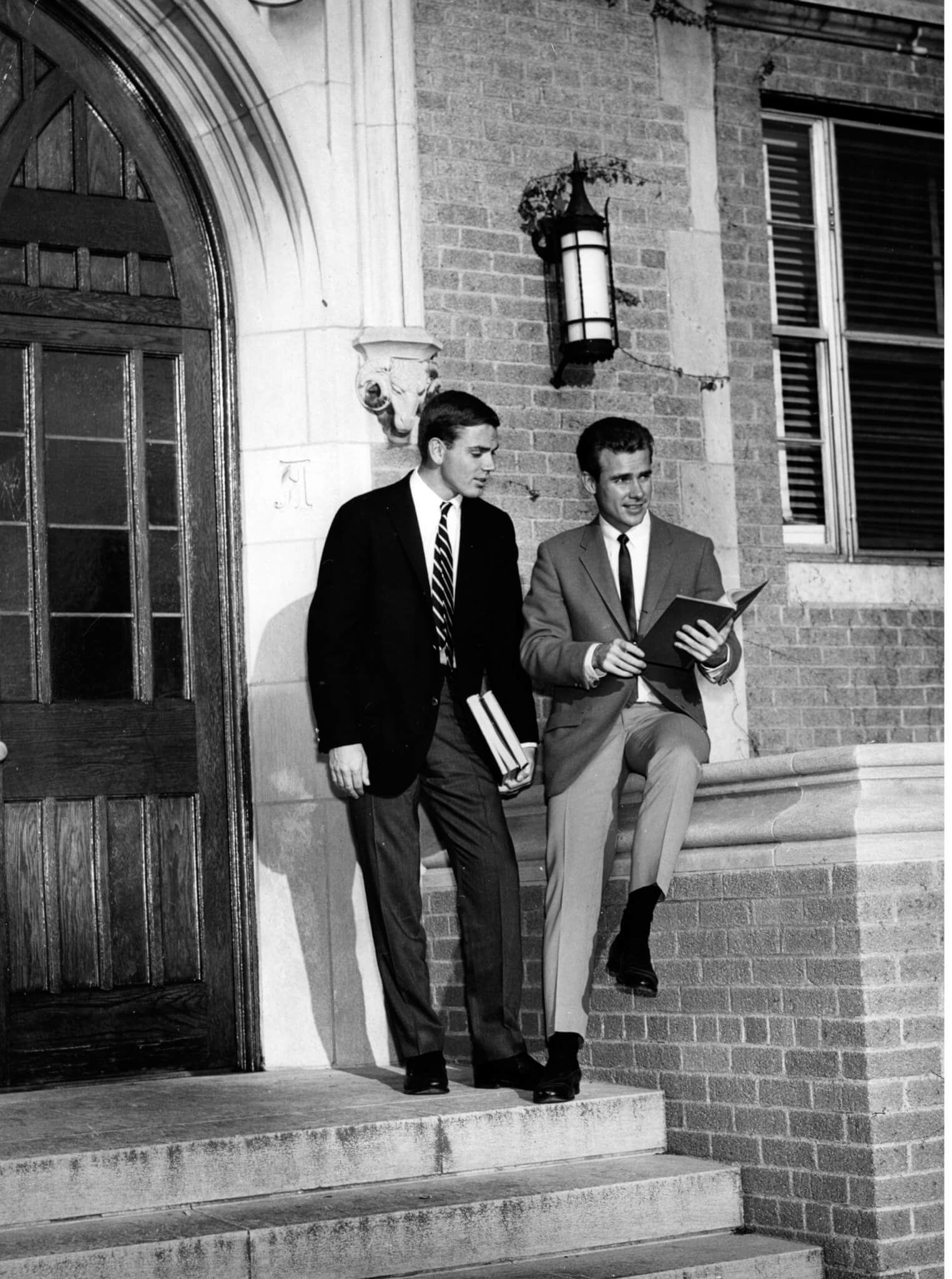
U.S. college students in the 1960s wearing blazers Photo: Interfoto/Afro
And this specification soon gained favor with college students, as the Ivy League of the 1940s and 1950s adopted the blazer as the centerpiece of campus style, and young men in blazers began to appear frequently in graduation albums and student newspapers. By the late 1950s, details such as center hooked vents, patch pockets, and three buttons with a stepped back became standard specifications, and companies began to offer similar blazers. In the late 1950s, the blazer became a standard item of clothing. The blazer was not limited to everyday wear; many politicians, artists, and other prominent figures began to wear blazers in public.
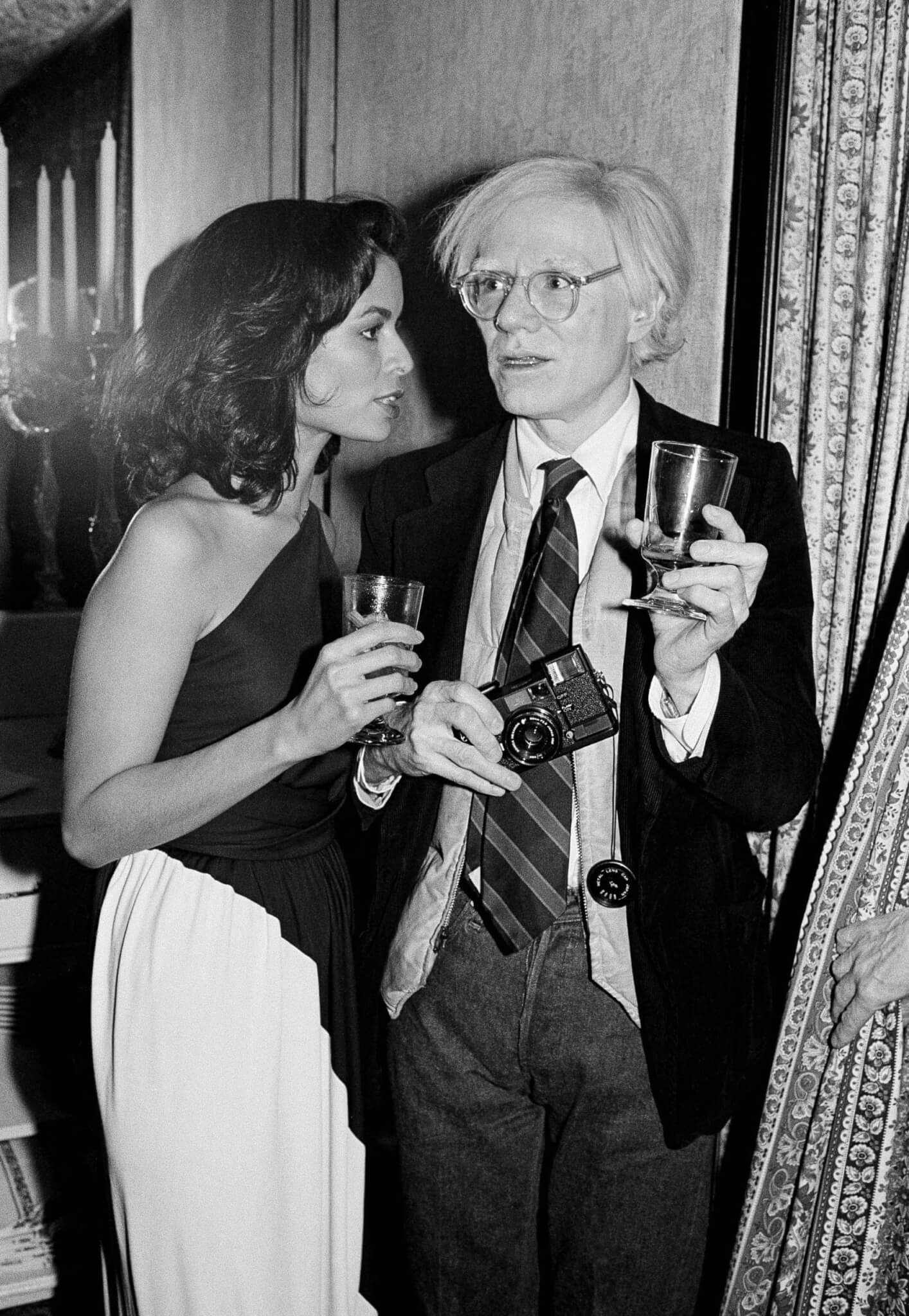
Photo: AP/Afro Bianca Jagger and artist Andy Warhol talk at party honoring film director George Cukor at Tavern on the Green Restaurant in New York Sunday The party for Cukor followed a gala at Lincoln center.
Blazers really took off in Japan in the 1960sThe Ivy Boom led to the spread of the blazer, making it a timeless item favored by every generation
The blazer really took off in Japan during the so-called Ivy Boom of the 1960s. This movement, led by VAN Jacket and Men’s Club magazine, introduced the American student style of navy blue blazers, button-down shirts, and rep ties.
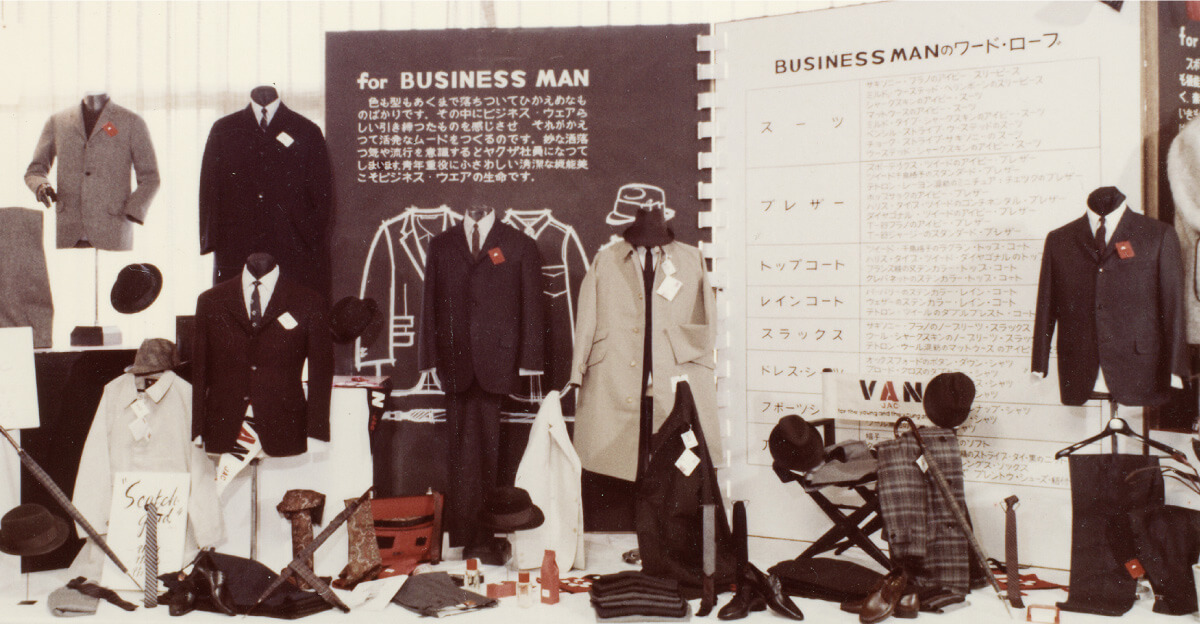
Later, from the 1970s to the 1990s, the blazer became established as everyday wear. The blazer type was adopted as the uniform for junior and senior high school students, and while the perception of it as a school uniform became common, combinations such as chinos and jeans became widespread as casual wear. In particular, during the Shibu-Kaje boom of the late 1980s and 1990s, chinos were popular as a light style worn with deck shoes and loafers.
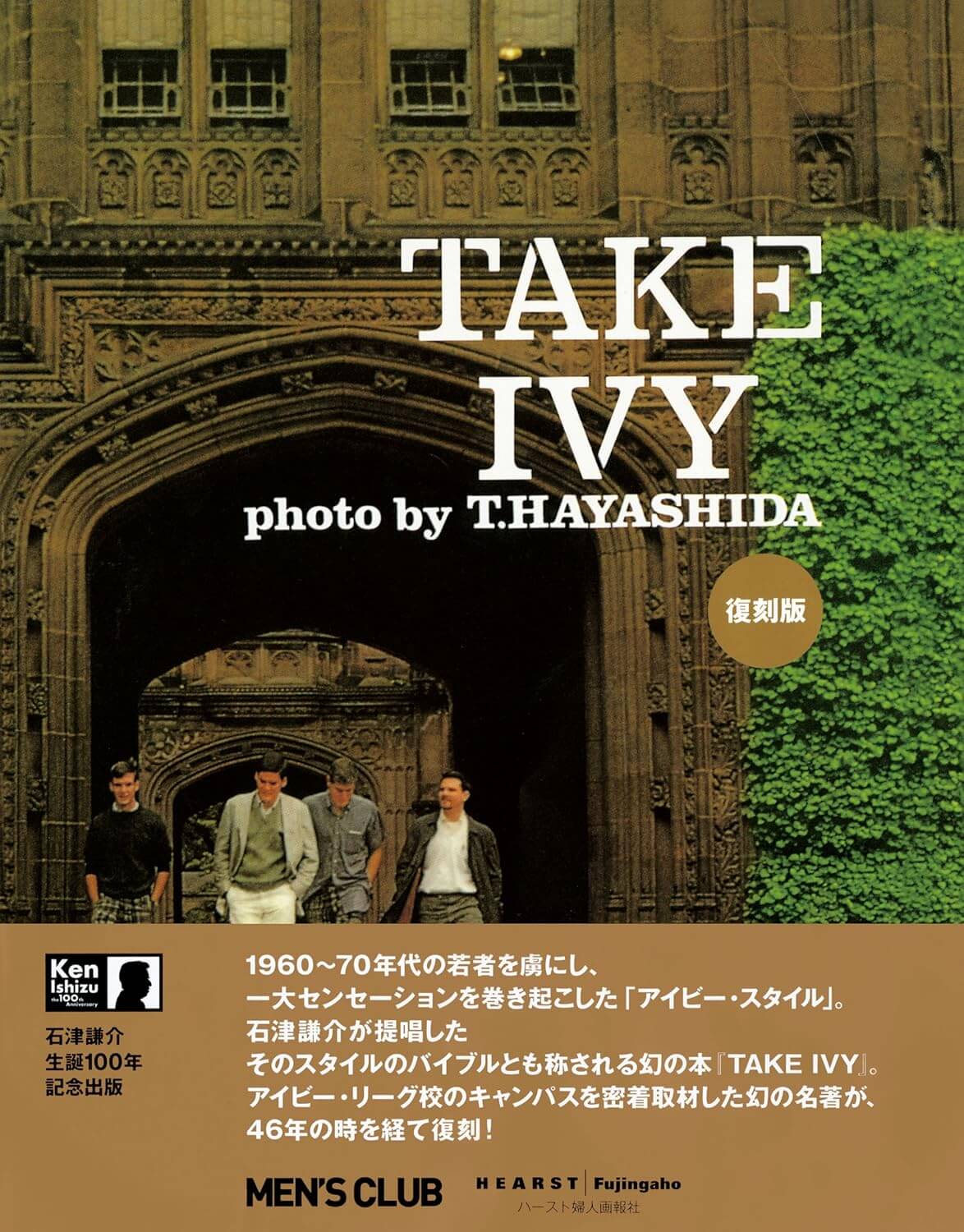
The photo book ”Take IVY,” published by Fujin Gaho in 1965, became the vivre of Ivy fashion in Japan.
In recent years, with the expansion of the vintage clothing market and re-proposals by various brands, a freer interpretation of the fashion among young people, unbound by conventional dress codes, has taken root. The fact that the way of wearing blazers differs greatly from generation to generation shows that the blazer is not a garment fixed to a single style. In the recently published article [“Blazer Style Evolution: Generation Z” vs. “Generation Yutaka” – Tips for updating the blazer with Azabu Tailor and serious consideration ], staff members from different generations at Azabu Tailor propose a unique generational balance for the blazer. Timeless, yet interpreted differently depending on the era and generation. The range of ways to wear blazers is what we want to enjoy when adopting blazers.
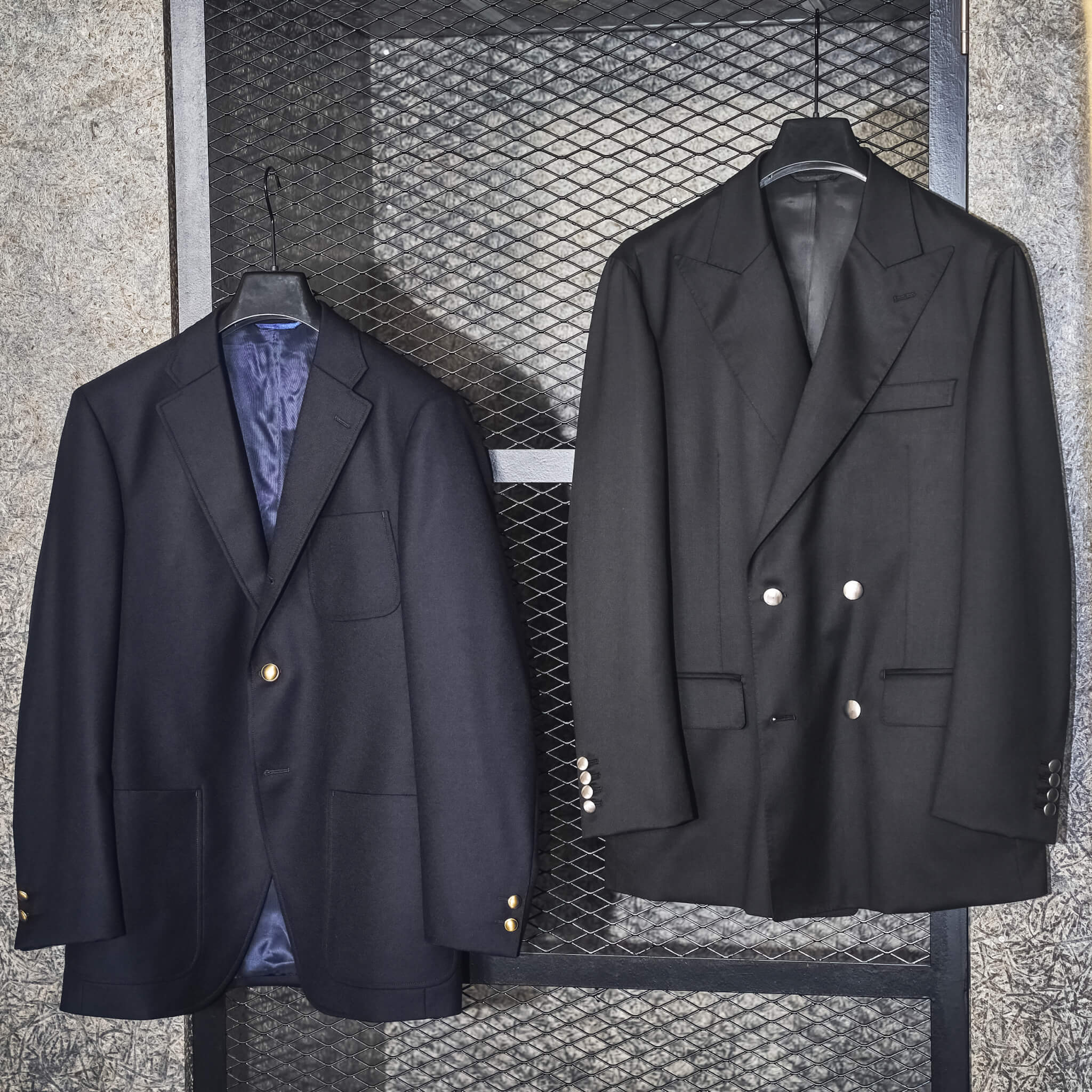

From here on, we will be introducing the well-dressed people’s outfits as a reference for incorporating blazers in the business scene. In each part, we asked Mr. Shinozuka of Azabu Tailor, a “pioneer of fashion tailoring” supported by many fashion lovers and business people, to answer some simple questions that arise when actually wearing a blazer as a business style. a “pioneer of fashion tailoring” supported by many fashion enthusiasts and business people.
2/19GO TO NEXT PAGE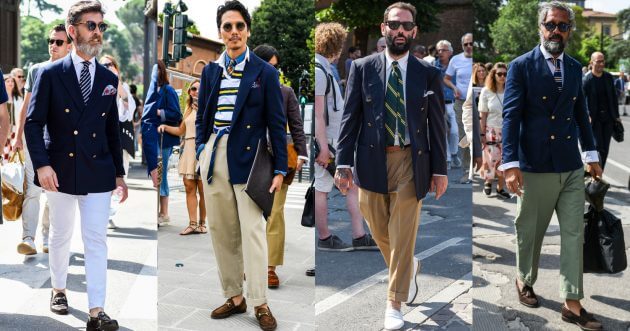
![The Complete Guide to Jackets [ Royal Combinations, Basic Rules for Never Making a Mistake, Examples of Codes, and Recommended Items ].](https://otokomaeken.com/wp-content/uploads/2026/03/c9e62da8005f3f4de1ab842ea4e26dce313aa618a1f18a8f1657a283c4a08dcb-630x331.jpg)


![Summer Tailored Jacket Wearing Ideas [Casual Occasions].](https://otokomaeken.com/wp-content/uploads/2025/06/3ee3b1b761e6b6c2b78a6a337952991a79c6305fcb5728346fa1a8bc2f283224-630x331.jpg)
![How to Wear a Navy Suit for a Decisive Man [Business Style].](https://otokomaeken.com/wp-content/uploads/2016/04/069069ac1a36ff17d5fb59313c0e4f44-630x331.jpg)
![Denim Jacket Codes 2025 [ Characteristics by Type, Latest Men’s Snapshots and Recommended Items ].](https://otokomaeken.com/wp-content/uploads/2025/09/57193e56e12bdbcdc4c8d2c06c9ff4fed87e176d7abea6d841951392a3f1e0b6-630x331.jpg)




![What to Wear When the High Is 24 Degrees [3 Men's Outfit Ideas Based on the Temperature Difference Between the High and Low]](https://otokomaeken.com/wp-content/uploads/2026/10/123ac7d53dbc900bab7d6703661e0cd1b47414a0a1a16c6347e3d09bfa184b6c-750x396.jpg)